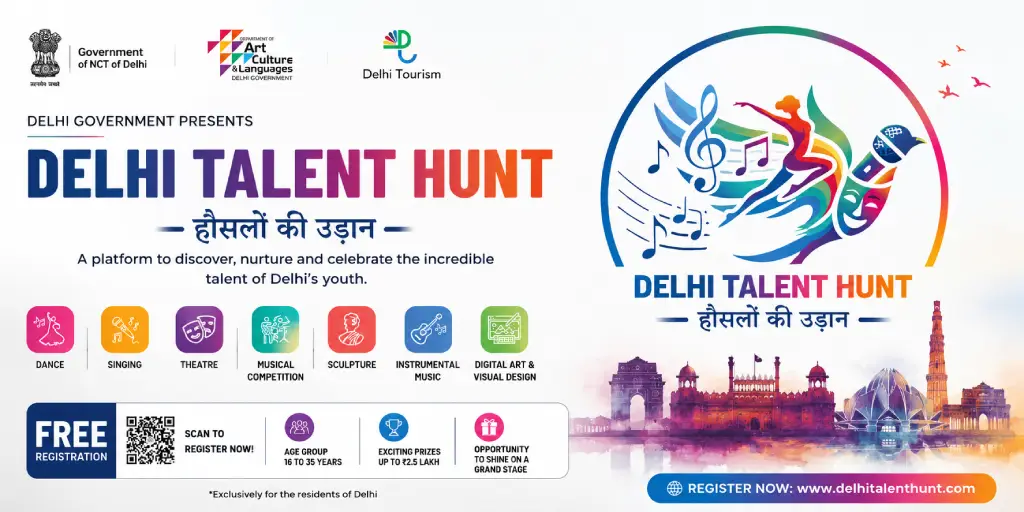
The Delhi Government has recently launched a powerful youth-focused initiative known as the Delhi Talent Hunt Scheme (also referred to as “Hauslon Ki Udaan”), aimed at identifying, nurturing, and promoting emerging talent across the national capital. This scheme is being seen as one of the most structured creative platforms for young artists in India, offering them a direct path from local participation to large-scale recognition and professional exposure.
According to official information, the scheme is implemented by the Department of Art, Culture and Languages, Government of Delhi, and is designed to give equal opportunity to youth from all backgrounds to showcase their skills in various creative fields. ([Govt Schemes][1])
This initiative is not just a competition, but a multi-stage talent development ecosystem that aims to connect grassroots talent with mainstream cultural and entertainment platforms.
What is Delhi Talent Hunt Scheme?
The Delhi Talent Hunt Scheme 2026 is a government-backed cultural and youth development program that provides a structured platform for individuals aged 16 to 35 years to showcase their talent.
The initiative allows participants to register online and submit audition videos, which are then evaluated through multiple levels of selection. The scheme is designed to be inclusive, transparent, and merit-based, ensuring that talent from every corner of Delhi gets equal opportunity.
As per government documentation, the platform aims to:
- Identify hidden talent in Delhi’s youth
- Provide structured exposure through competitions
- Offer mentorship and training opportunities
- Create pathways to professional recognition in creative industries ([Delhi Talent Hunt][2])
Key Objectives of the Scheme
The Delhi Talent Hunt is built around several important goals:
1. Promoting Youth Creativity
The scheme encourages young individuals to explore and showcase their skills in areas such as singing, dancing, acting, and digital creativity.
2. Providing Equal Opportunity
One of the strongest pillars of the initiative is inclusivity, ensuring that talent from all socio-economic backgrounds gets a fair chance to participate.
3. Building a Cultural Ecosystem
By creating a structured talent pipeline, the government aims to strengthen Delhi’s cultural identity and creative economy.
4. Encouraging Professional Growth
Winners and shortlisted candidates receive mentorship, exposure, and potential opportunities in media, arts, and entertainment industries.
Who Can Participate?
The eligibility criteria for the Delhi Talent Hunt Scheme are simple and youth-friendly:
- Age group: 16 to 35 years
- Residency: Must be a resident of Delhi
- Participation: Open and free for all eligible candidates
- Registration Mode: Online through official portal
The scheme is designed to ensure that participation remains accessible, especially for students, freelancers, and aspiring artists who may not have access to professional platforms.
Categories of Talent Under the Scheme
The Delhi Talent Hunt covers a wide range of creative and performing arts categories. As per official reports, participants can choose from seven major categories, including:
1. Singing & Music
Participants can showcase vocal talent, songwriting, and instrumental skills.
2. Dance
Classical, contemporary, hip-hop, folk, and fusion dance forms are accepted.
3. Acting & Theatre
Short performances, monologues, and theatre-based presentations are part of this category.
4. Digital Art & Creativity
Includes graphic design, animation, visual storytelling, and digital content creation.
5. Sculpture & Craft
Traditional and modern art forms including pottery and sculpture.
6. Composition & Music Creation
Original compositions, background scores, and creative musical works.
7. Performing Arts & Street Theatre
Socially relevant performances, street plays, and awareness-based artistic expression.
Selection Process: How Talent is Evaluated
The Delhi Talent Hunt Scheme follows a multi-phase selection system to ensure fairness and transparency.
Phase 1: Online Registration & Video Submission
Participants register on the official portal and upload audition videos showcasing their talent.
Phase 2: Preliminary Screening
Experts evaluate submissions based on creativity, originality, and performance quality.
Phase 3: Zonal & Constituency-Level Competitions
Selected participants move to live regional competitions across Delhi.
Phase 4: Grand Finale
Top performers from all zones compete in a final stage event for awards and recognition.
This structured approach ensures that every participant gets multiple opportunities to grow and improve during the competition journey.
Rewards and Incentives
One of the most attractive aspects of the scheme is its **cash reward structure and recognition system**.
Winners receive:
- 🥇 First Prize: Up to ₹2.5 lakh
- 🥈 Second Prize: ₹2 lakh
- 🥉 Third Prize: ₹1.5 lakh
- 🏅 Fourth Prize: ₹1 lakh
Apart from monetary rewards, participants also gain:
- Public exposure
- Mentorship opportunities
- Stage performance experience
- Possible industry collaborations
Reports suggest that thousands of youth are expected to participate in the program, making it one of the largest talent-driven initiatives in Delhi. ([The Times of India][3])
Official Platform and Registration
The official digital platform for the initiative is:
https://www.delhitalenthunt.com
This website serves as the central hub for:
- Registration process
- Guidelines and eligibility
- Category selection
- Video submission
- Updates and announcements
The platform is designed to create a transparent and structured progression system, guiding participants from online auditions to final stage performances.
Why This Initiative is Important for Delhi Youth
The Delhi Talent Hunt Scheme is more than just a competition—it represents a shift in how governments engage with youth talent.
Key Benefits:
✔ Encourages grassroots talent discovery
✔ Provides government-backed credibility
✔ Reduces barriers for entry into creative industries
✔ Promotes cultural diversity and expression
✔ Supports career-building for young artists
In a city like Delhi, which is already a hub for arts, culture, media, and entertainment, this initiative helps channel raw talent into structured opportunities.
Impact on Creative Industry
The scheme is expected to have long-term impact on:
- Music industry (new independent artists)
- Film and theatre (fresh acting talent)
- Digital content creation (social media creators)
- Cultural preservation (traditional art forms)
It also strengthens Delhi’s position as a creative capital of India, where talent can be discovered, nurtured, and launched at a professional level.
Final Thoughts
The Delhi Government’s Talent Hunt initiative is a strong step toward building an inclusive creative ecosystem. By combining digital platforms with offline competitions, it ensures that talent is not limited by geography, resources, or background.
For young aspirants, this scheme represents more than just a contest—it is a launchpad for dreams, careers, and recognition.
With structured support, transparent evaluation, and meaningful rewards, the Delhi Talent Hunt has the potential to become one of India’s most impactful youth development programs in the cultural and creative sector.
Frequently Asked Questions (FAQs)
Q1. What is Delhi Talent Hunt 2026?
Delhi Talent Hunt 2026 is an initiative by the Delhi Government aimed at identifying and promoting talented youth across various fields such as singing, dancing, acting, theatre, digital arts, and other creative disciplines.
Q2. Who can apply for Delhi Talent Hunt 2026?
Youth between the age of 16 and 35 years who meet the eligibility criteria specified by the organizers can apply through the official registration portal.
Q3. How can I register for Delhi Talent Hunt 2026?
Interested participants can register online through the official Delhi Talent Hunt website by filling out the application form and submitting the required details and performance videos.
Q4. What are the categories available in Delhi Talent Hunt 2026?
The competition includes categories such as singing, dancing, acting, theatre, music composition, digital arts, sculpture, and other performing arts.
Q5. Is there any registration fee for Delhi Talent Hunt 2026?
Applicants should check the official website for the latest registration guidelines. The initiative is designed to encourage maximum youth participation across Delhi.
Q6. What is the prize money offered under Delhi Talent Hunt 2026?
Selected winners can receive attractive cash prizes, recognition certificates, and opportunities for further exposure through government-supported cultural platforms.
Q7. What documents are required for registration?
Applicants may need identity proof, age proof, address details, photographs, and performance-related submissions as specified during the registration process.
Q8. Where can I find the official Delhi Talent Hunt website?
Participants can visit the official website to register, check eligibility criteria, and access the latest announcements related to the competition.
Q9. Can participants apply in more than one category?
The eligibility for multiple categories depends on the official rules and guidelines published by the organizers on the registration portal.
Q10. Why is Delhi Talent Hunt important for young artists?
The initiative provides a government-backed platform for talented youth to showcase their skills, gain recognition, connect with industry opportunities, and build a professional creative career.